Seeing global business up close
Corporate visits connected supply-chain and strategy concepts with real organizations, giving students a closer look at manufacturing, sourcing, logistics, operations, and digital business in international markets.
Japan & South Korea · International supply chains, global business, and learning beyond the classroom
In 2026, students in Bridging Borders: Exploring International Supply Chains traveled through Japan and South Korea, connecting course ideas with corporate visits, university exchange, expert discussions, and hands-on cultural experiences. Along the way, students saw how international business is shaped not only by firms and operations, but also by people, institutions, history, and culture.
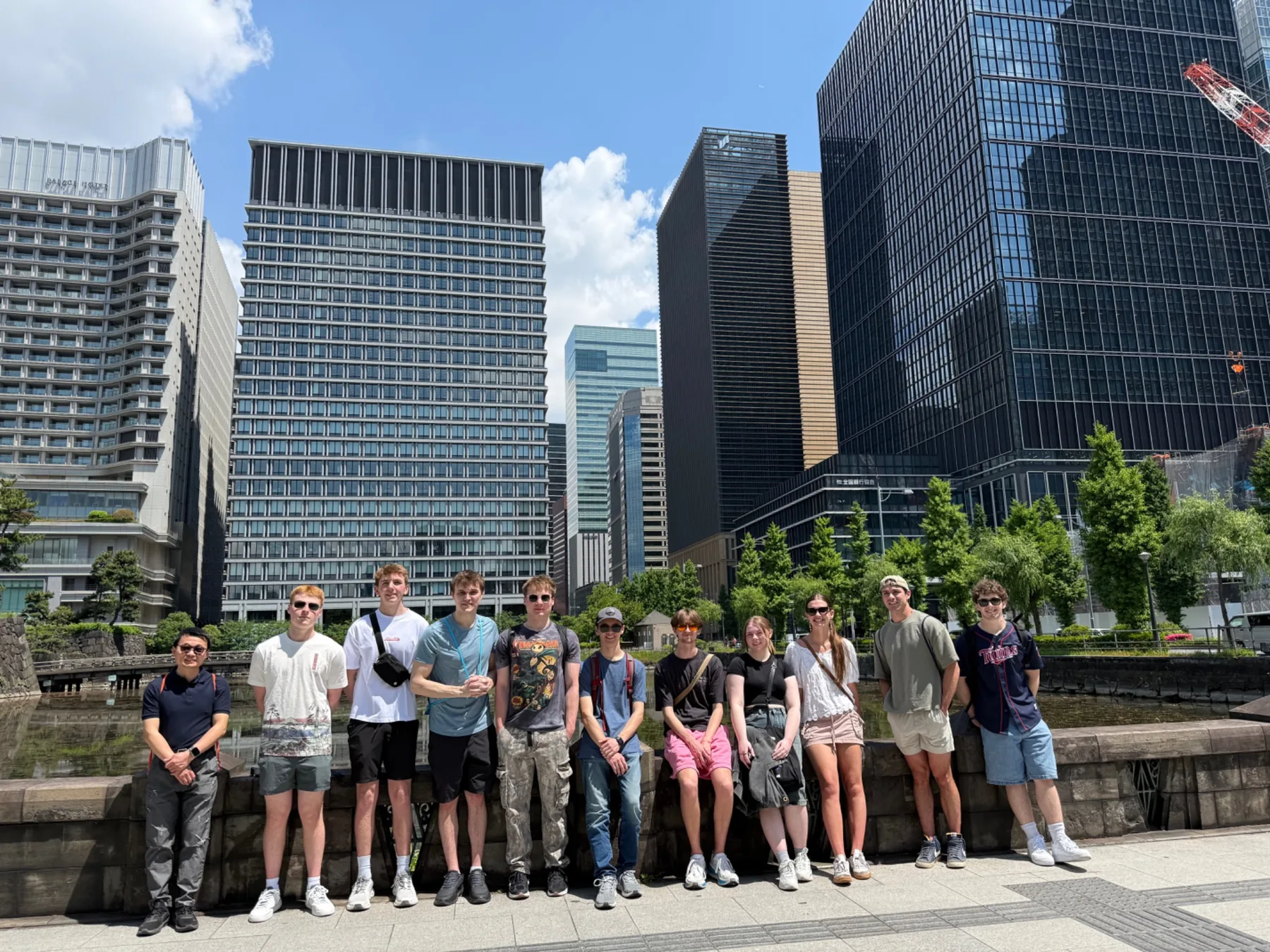
This photo story captures a few of the moments that made the program memorable-from global business conversations and peer learning to cooking, dance, historic sites, and shared meals.
Corporate visits connected supply-chain and strategy concepts with real organizations, giving students a closer look at manufacturing, sourcing, logistics, operations, and digital business in international markets.
University exchange, expert-led discussions, and experiential learning created opportunities to compare perspectives, explore regional industries and public policy, understand the cultural foundations of business practices, communicate across cultures, and learn with local peers-skills that matter in any international supply chain.
Historic sites, traditional dress, food, city life, and time spent together gave students a richer understanding of the cultural contexts in which people live, communicate, and do business.
What made Bridging Borders memorable? Students reflect on the places, people, friendships, learning, and cultural experiences that stayed with them, and share what they would tell future participants.
Student reflections from the 2026 Japan & South Korea program.
The 2026 cohort experienced international supply chains as systems shaped by companies, communities, institutions, infrastructure, culture, and people-the kind of learning that is difficult to reproduce in a classroom alone.
Return to the main program page